Download PDF Making Movies, by Lumet
Why ought to be book Making Movies, By Lumet Book is among the easy sources to seek. By getting the author and also motif to get, you could locate many titles that provide their data to obtain. As this Making Movies, By Lumet, the impressive publication Making Movies, By Lumet will give you exactly what you should cover the job due date. And why should be in this internet site? We will ask first, have you more times to go for shopping the books and also look for the referred book Making Movies, By Lumet in publication store? Many people could not have enough time to discover it.
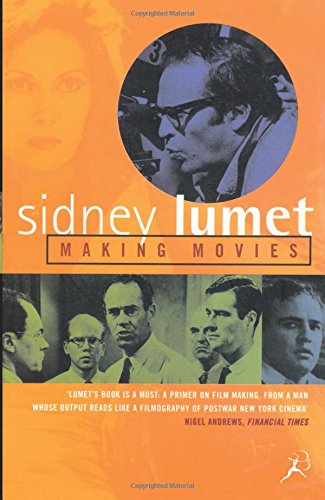
Making Movies, by Lumet

Download PDF Making Movies, by Lumet
Making Movies, By Lumet Exactly how can you change your mind to be more open? There several resources that could assist you to boost your ideas. It can be from the various other encounters and also story from some individuals. Schedule Making Movies, By Lumet is one of the trusted sources to obtain. You can find plenty books that we share right here in this site. As well as currently, we show you among the very best, the Making Movies, By Lumet
When some people checking out you while checking out Making Movies, By Lumet, you might feel so happy. But, as opposed to other individuals feels you need to instil in on your own that you are reading Making Movies, By Lumet not because of that reasons. Reading this Making Movies, By Lumet will offer you greater than people admire. It will certainly guide to know more than individuals looking at you. Already, there are lots of resources to discovering, reviewing a book Making Movies, By Lumet still ends up being the first choice as a terrific method.
Why should be reading Making Movies, By Lumet Once more, it will certainly depend on how you feel and also consider it. It is surely that one of the perk to take when reading this Making Movies, By Lumet; you can take more lessons directly. Even you have actually not undertaken it in your life; you could get the encounter by reading Making Movies, By Lumet And currently, we will present you with the online publication Making Movies, By Lumet in this site.
What type of publication Making Movies, By Lumet you will choose to? Now, you will certainly not take the published publication. It is your time to get soft data publication Making Movies, By Lumet rather the printed files. You can enjoy this soft file Making Movies, By Lumet in at any time you expect. Even it remains in expected place as the various other do, you can check out the book Making Movies, By Lumet in your gizmo. Or if you desire much more, you could read on your computer system or laptop to obtain full screen leading. Juts discover it right here by downloading the soft documents Making Movies, By Lumet in web link web page.
Why does a director choose a particular script? What must they do in order to keep actors fresh and truthful through take after take of a single scene? How do you stage a shootout—involving more than one hundred extras and three colliding taxis—in the heart of New York’s diamond district? What does it take to keep the studio honchos happy? From the first rehearsal to the final screening, Making Movies is a master’s take, delivered with clarity, candor, and a wealth of anecdote.
For in this book, Sidney Lumet, one of our most consistently acclaimed directors, gives us both a professional memoir and a definitive guide to the art, craft, and business of the motion picture. Drawing on forty years of experience on movies that range from Long Day’s Journey into Night to Network and The Verdict—and with such stars as Katharine Hepburn, Paul Newman, Marlon Brando, and Al Pacino—Lumet explains how painstaking labor and inspired split-second decisions can result in two hours of screen magic.
- Sales Rank: #8463744 in Books
- Published on: 1996
- Format: Import
- Original language: English
- Number of items: 1
- Dimensions: 7.79" h x .53" w x 5.07" l, .57 pounds
- Binding: Print on Demand
- 260 pages
Amazon.com Review
It's well known that a vast number of people work on any given movie in roles as varied as writing scripts, choosing locations, dressing sets, costuming the players, lighting scenes, manipulating the camera, directing actors, editing film, working on sound, advertising the finished product, and screening it to an audience. Have you ever thought about how these components are collated? Or why the director is most often considered the author of a film? Wonder no more, because Sidney Lumet's Making Movies is a terrific journey through each stage of filmmaking that is overseen by the director. Lumet, the veteran director of Twelve Angry Men, The Pawnbroker, Serpico, Dog Day Afternoon, Network, The Verdict, and many other fine movies, knows the ins and outs of American filmmaking as well as anyone. In this excellent, personable account, Lumet tells what he's learned about making movies in the course of the last 40 years. He shows why fine directors need to have strong imaginations, extraordinary adaptability, and skill in many different fields. His enthusiasm for his life's work, particularly his love of actors, is evident on every page of this book. As Herculean as the labors of film directing are, Lumet takes great pleasure in his work, almost guiltily admitting that the film director's job is "the best in the world."
From Publishers Weekly
Lumet, the acclaimed director of such films as Dog Day Afternoon and Network, presents an anecdotal insider's account of the key elements in filmmaking.
Copyright 1996 Reed Business Information, Inc.
From Library Journal
Lumet's book is about the agonizing and ultimately rewarding art of filmmaking. And who better to elucidate the process than a legendary director, with credits such as 12 Angry Men, Dog Day Afternoon, and Prince of the City? Lumet discusses writers and actors, camera and editing techniques, art direction and sound. Yet Making Movies is anything but a clinical textbook. Lumet's career straddled the shift between studio management and the rise of financiers and talent agencies: he's seen both worlds and candidly reveals his predilections, including his disdain for teamsters, critics, and market researchers. He alludes to the tension between film as art and as business and shows that filmmaking is ultimately a capricious, collective enterprise with no sure formulas. Although overly mechanistic at times, Lumet is most lucid in examples drawn from his own experiences. A fascinating look at the artist at work; recommended for film studies collections.
-?Jayne Plymale-Jackson, Univ. of Georgia Libs., Athens
Copyright 1995 Reed Business Information, Inc.
Most helpful customer reviews
4 of 4 people found the following review helpful.
Excellent Introduction
By Hamilton Beck
"Making Movies" is one of the best books on the nuts and bolts of film-making ever. It deserves the highest rating simply because it is both well presented and full of practical insights. Lumet is brilliant on the psychology of movie-making in the old days, for instance, when each producer had the power to order cuts at will. The director who knew this would deliberately leave some weak scenes in during early screenings so that the producers could order them removed and thus later claim to have "saved" the picture – if, that is, it turned out to be a hit.
That said, Lumet's overall approach is not historical but topical, from selecting a writer to making the final cut. In Chapter Three, he raises a point I often try to impress upon my students: The way you tell a story should relate somehow to what that story is about. That gets to the whole question of the importance of style, which he terms "the most misused word since love." (pg. 49)
Good, practical advice can be found on every page. Here's how he can tell if something is off when watching a scene during rushes: "If my concentration breaks, something is wrong." (pg. 141) This, I might add, applies equally well to reading as to watching – if our attention drifts, there may be something wrong with the book we are reading, or the text of the speech we are delivering.
Here's something that may seem counter-intuitive: The audience's perception of the length of a film depends not on the tempo of the movie itself so much as the presence or absence of changes in tempo. The fewer the changes, even if the tempo is fast, the longer the movie will seem. Most melodramas accelerate speed towards the end. Inexperienced directors adopt an up-tempo from the start, then believe they have left themselves nowhere to go except even faster, thus exhausting the audience long before the final credits.
Lumet candidly confesses he doesn't know what makes a hit, and doubts that anyone really does. It is certainly not the stars alone. He talks about those he has worked with (including Paul Newman and Al Pacino) without indulging in gossip, and when he has something negative to say, he does so without naming names. One movie of his, which he refuses to identify, suffered from the limited range of one of its stars. "On the second day of shooting, I began to realize that the leading actress lacked the tenderness her part called for. She simply didn't have it in her as an actress or a person. She was superb with anger; she had humor. But if she was asked to show the simplest affection for the person playing opposite her, a falseness crept into her acting that was readily apparent, particularly since her acting was otherwise so real and true…. Since the movie was fundamentally a love story, I knew that we were in trouble." (pp. 143-144) I wonder if the movie in question might not have been "The Morning After." The only hint he provides is that the film "had three very high-powered stars in it." "Morning After" featured Jane Fonda, Jeff Bridges and Raul Julia. On the other hand, Fonda did receive an Oscar nomination for her performance here, so I can't be certain.
Though most (but not all) of the examples are taken from movies he himself directed, the book is most definitely not a survey of his career. While "Murder on the Orient Express," for example, gets mentioned at least a dozen times, "Fail Safe" rates only a single one, early on. Incidentally, what he has to say about "Murder…" gives me a higher opinion of that movie than I ever had before; now I am tempted go back and take another look at it. The chapter on the "lens plot" in "12 Angry Men" – how he used differing lenses to create an increasing sense of claustrophobia – is justly famous.
On the whole, Making Movies is an enlightening introduction to the craft, presented by an insider. If you are like me, you will be amazed at what you hadn't noticed in movies you thought you knew.
For a longer version of this review, please go to hamiltonbeck dot wordpress dot com
2 of 2 people found the following review helpful.
Great Book by a Greater Director
By Jordan Hunter
Sidney Lumet's "Making Movies" is a wonderful insight into the director's role in the filmmaking process. The entire book reads like Lumet has sat you down to tell you a story. We get a chance to peer into his mind as he makes small but critical choices throughout the Pre-Production, Production, and Post-Production phases in the movie's life. Lumet gives many clear and specific examples of moments in his career where he had to overcome the odds to get the shot or performance that the film called for. This book is great for the aspiring filmmaker and seasoned industry veteran alike.
I knocked off 1 star only because some of the technical processes of filmmaking described in the book are no longer used, and it made the book feel very dated. The writing is still great and it's nice to hear about how films used to be made. The techniques of working with actors still hold up, as well as the detailed descriptions of the director's role within the larger company of talent and executives.
I highly recommend this book to anyone who wants to advance their cinema education and gain deep appreciation for the art form.
2 of 2 people found the following review helpful.
I waited 10 years to find this book
By PT
10 years ago I read "You'll Ever and Never Eat Lunch in This Town Again."I wanted to know how movies were made – the business. There was nothing useful for me in that book.
This book is exactly the book I wanted. With all of the technicalities – but not to the point of being boring. I did read Rosenbloom's book about editing, and that was pretty technical and dry I thought. Lumet is much more entertaining. This is a very well-written book, easy-to-read. I still don't understand all of the technology, but that's hardly the point.
P.S., I am a 67-year-old technical writer. Also: The Kindle version was fine on my iPad; however, I really prefer audiobooks. This would make a good one.
Making Movies, by Lumet PDF
Making Movies, by Lumet EPub
Making Movies, by Lumet Doc
Making Movies, by Lumet iBooks
Making Movies, by Lumet rtf
Making Movies, by Lumet Mobipocket
Making Movies, by Lumet Kindle

Tidak ada komentar:
Posting Komentar